The Technological Symbiosis Between AI and Classical Computer Vision: The Future of Industrial Inspection
Industrial inspection AI is becoming essential as modern industry evolves in the detection and classification of defects on high-value specular surfaces.
1. A New Industrial Reality: Complex Defects, Higher Standards
Modern industry is undergoing a profound transformation in the way it detects and classifies defects on high-value specular surfaces. Sectors such as automotive, architectural glass and steel production work with components where even sub-millimetre anomalies can compromise both aesthetics and functional integrity. Under real production conditions—characterised by variable illumination, reflective geometries and high throughput—the limitations of traditional manual inspection become evident. Human operators are affected by subjectivity, fatigue, and lack of consistency, making manual inspection unsuitable for today’s precision-driven environment.
At the same time, neither classical computer vision nor AI alone can meet the demands of such surfaces. Classical algorithms guarantee mathematical precision, full reproducibility, and real-time performance, yet they struggle with complex, non-linear defect morphologies or unpredictable lighting behaviours. AI models, on the other hand, excel at learning variability, recognising complex patterns and interpreting morphology, but they often require extensive datasets, high computational resources and lack the deterministic stability required in industrial environments.
This reality has pushed the sector toward a new paradigm: instead of choosing between classical vision or AI, the industry is embracing hybrid intelligent pipelines that combine the strengths of both. These pipelines deliver fully reproducible measurements, sub-pixel precision, highly adaptive classification, significantly fewer false positives, superior computational efficiency, and inspection accuracies that consistently exceed 96% in real-world deployment.
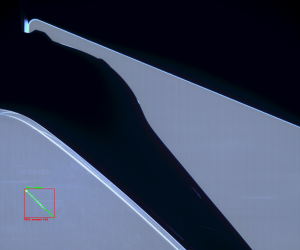
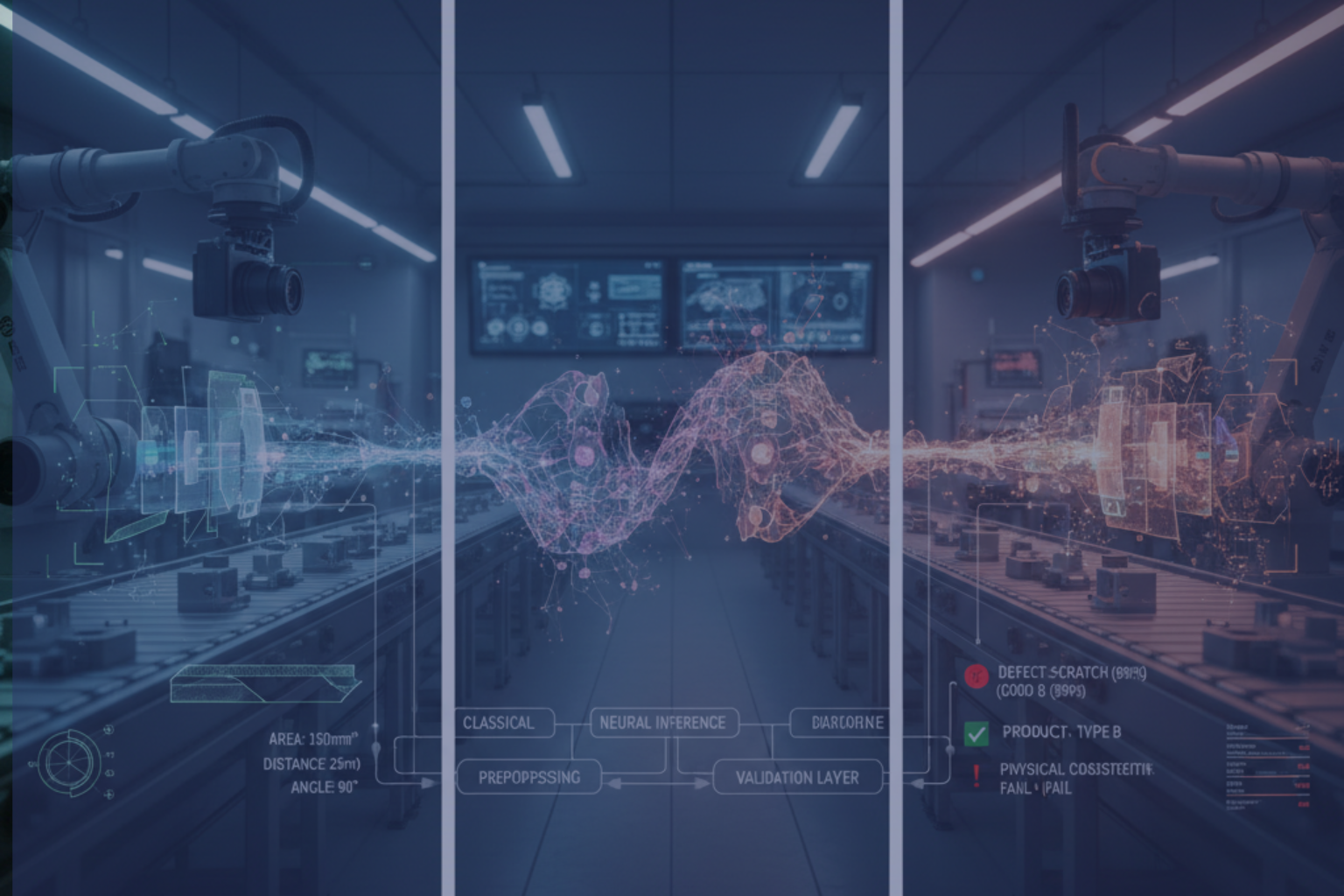
High-resolution optical capture showing edge-level defect detection on specular surfaces.
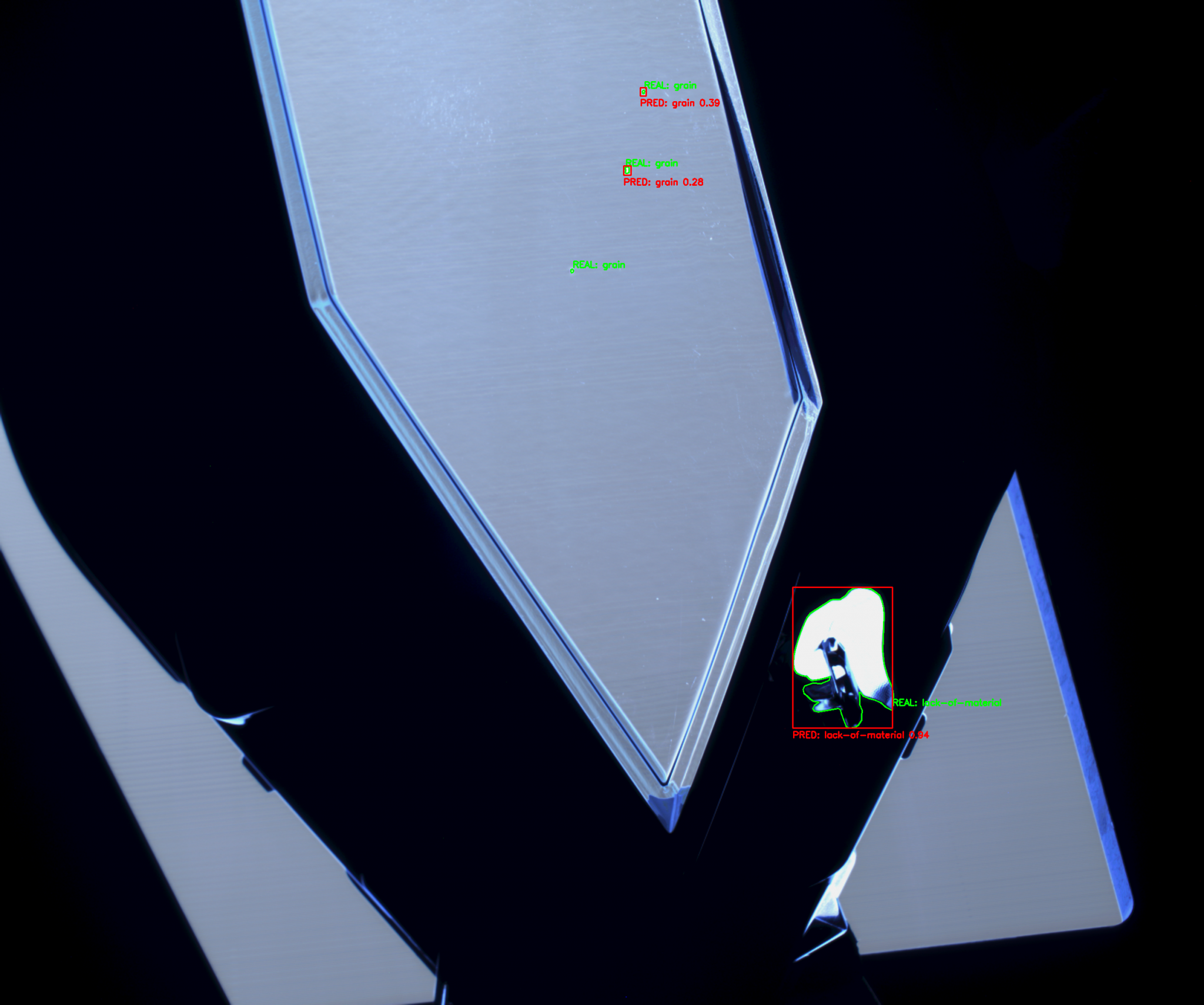
AI-assisted defect classification layered over classical geometric extraction.
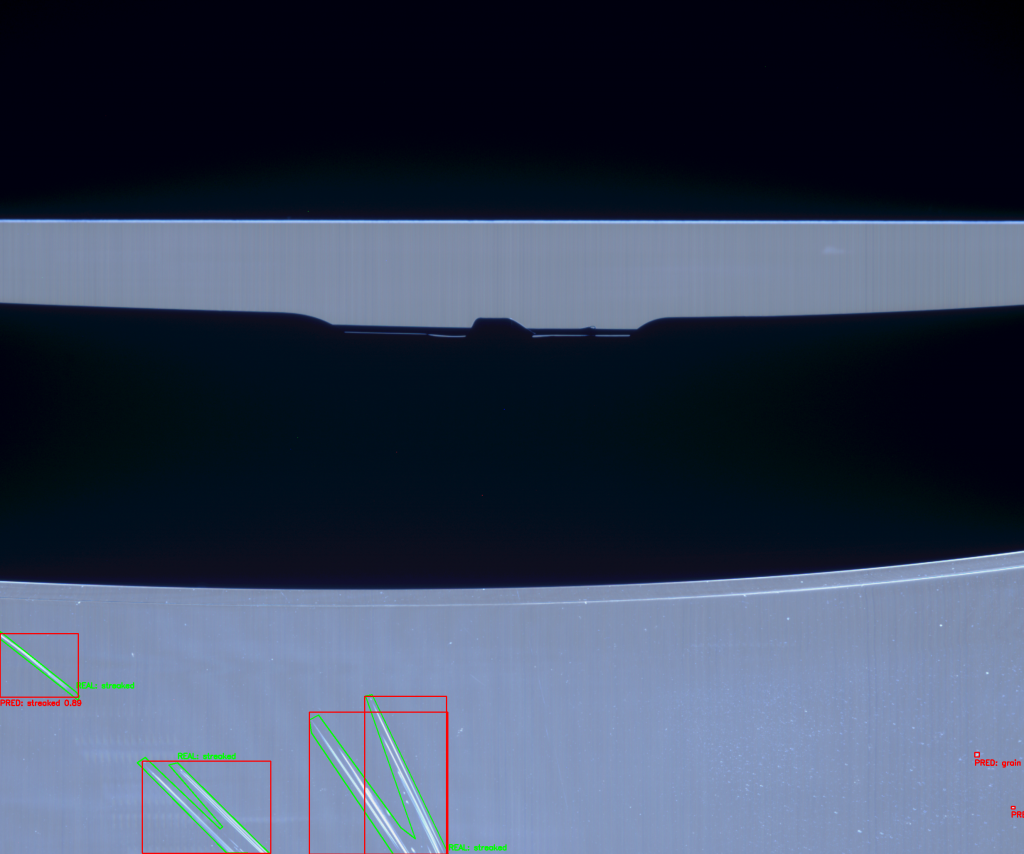
Hybrid inspection output combining deterministic measurements with deep-learning predictions.
2. How Industrial Inspection AI Pipelines Work: Precision Meets Adaptive Intelligence
Hybrid inspection architectures work by merging two technological foundations with complementary strengths. Classical computer vision handles the structural phase of the pipeline through filtering, edge detection such as Canny or Sobel, contour extraction and morphological analysis. These algorithms provide a deterministic mathematical backbone, ensuring stable measurements, precise segmentation and reliable region-of-interest extraction. This stage guarantees identical behaviour under identical conditions, which is essential in industrial ecosystems that operate continuously and require absolute consistency.
On top of this deterministic layer, deep learning and machine learning models provide the cognitive layer of inspection. AI models learn hierarchical representations capable of recognising surface anomalies such as scratches, grains, inclusions, stretching marks, deformations or material loss. Their ability to adapt to changing illumination conditions, subtle pattern variations and complex surface reflections allows the system to interpret defects that classical algorithms cannot model manually. As a result, the combination of classical preprocessing with AI-based classification leads to improved global accuracy, reduced false detections and lower computational load thanks to optimised ROI segmentation.
In essence, classical vision contributes precision, segmentation, geometry and speed, while AI contributes variability management, morphological understanding and intelligent classification. Their synergy creates an inspection pipeline that is robust, scalable and future-proof.
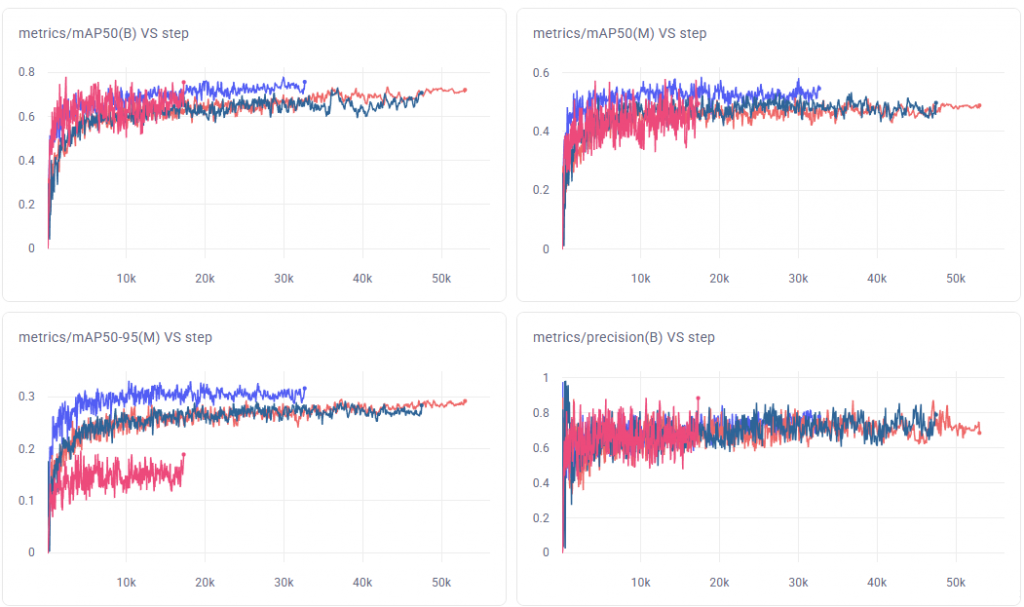
Evolution of AI model performance during training, showing stabilisation of mAP and precision as the network learns to detect complex surface defects on specular materials
3. The ISR Approach: A Deterministic Backbone Enhanced by Intelligent AI
At ISR Specular Vision, our systems OIT® (Optical Inspection Technology) are designed from the ground up following this hybrid philosophy. We specialise in the automatic inspection of high-value specular surfaces, where reliability, precision and consistency are non-negotiable.
The foundation of our systems is built using OpenCV in Java, enabling high-performance image acquisition, optical preprocessing and mathematical analysis. Our 4K line-scan cameras, capturing at 0.025 mm/pixel, ensure that even the most subtle details are visible. Through controlled dark-field illumination, advanced filtering and precise geometric extraction, we achieve deterministic measurements that are reproducible, stable and fully traceable. This deterministic backbone eliminates variability and provides a solid environment where AI models can operate reliably.
Once the classical stage has structured and filtered the imagery, we integrate advanced AI architectures such as YOLO, RT-DETR, and deep-learning anomaly detectors. These models allow real-time classification of complex defects, even in situations where reflectivity, brightness, vibration or process variations may affect the visual appearance of the surface. All AI components are integrated into live production lines, enabling manufacturers to automate what used to require expert human supervision while maintaining superior quality control across the entire process.
This hybrid ISR methodology results in industrial-grade accuracy, stable long-term performance, significant false-positive reduction, and complete inspection traceability. It is a system designed to meet not only today’s needs, but also the challenges that will emerge as manufacturing becomes increasingly autonomous and data-driven.
4. Final Insight: Complementarity Is the New Standard
The symbiosis between classical computer vision and artificial intelligence is not a temporary transition but the definitive model for the next era of industrial inspection. The path toward unprecedented quality standards, operational efficiency and sustainable manufacturing lies not in choosing between the deterministic rigor of classical algorithms or the adaptive intelligence of AI, but in uniting both into a single, coherent, intelligent system.
At ISR Specular Vision, we demonstrate daily that the competitive advantage of the future belongs to those who embrace this complementarity. Precision and reproducibility from classical vision, combined with adaptive, intelligent defect understanding from AI, form the technological foundation that will define the next decade of industrial excellence.
The future of industrial inspection lies in the complementarity between deterministic algorithms and adaptive AI models—not in replacing one approach with the other.
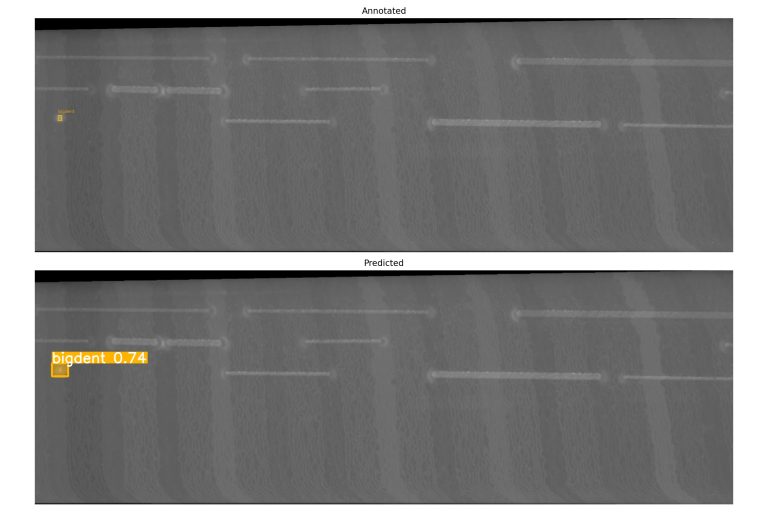
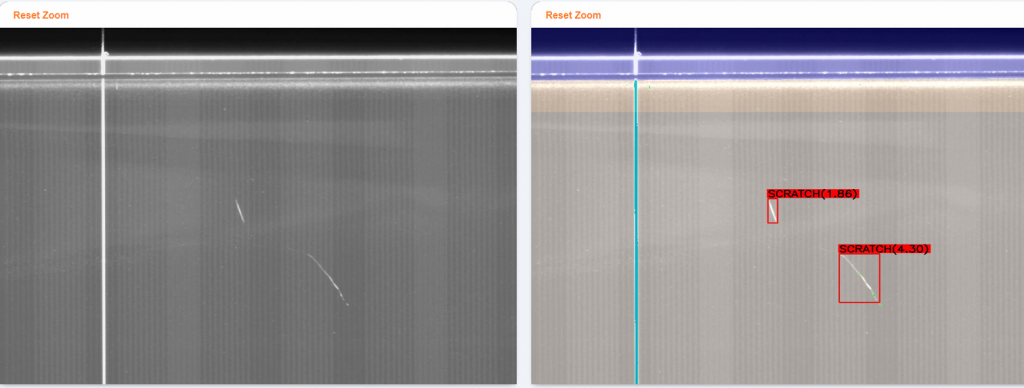
Comparison between raw line-scan capture and AI-based detection, showing how the model identifies subtle surface scratches with high precision.